The Final Exam is on Thursday, December 17th, from 9:00 to 11:00 in room 305.
The exam contains four sections, A to D.
Section A: Sound & Meaning concerns musical devices, including rhythm, rhyme, and so on. The focus will be on poems by Langston Hughes. There are two questions, the first counting three (3) points, and the second six (6) points.
Section B: Meaning & Idea focuses on poems by Wallace Stevens, concerning prose meaning and total meaning, idea, tone and theme. There are three questions, counting six (6), four (4), and three (3) points respectively.
Section C: Imagism will focus on one Imagist poet. There are three questions. The first two questions will focus on poetic devices, counting eight (8) points and five (5) points respectively. The third question requires an explication of an imagist poem and counts five (5) points.
Section D: Race & Gender focuses on two poems by Maya Angelou. There are three questions. The first and second questions each counts five (5) points and will be on poetic devices. The third question requires a comparative paragraph of the two poems in which you discuss the issues of race and gender; it counts ten (10) points.
The exam is an open book exam, so please bring your textbook, notes, and the photocopies of poems that are not in the textbook. You may also use a dictionary. Please remember that most of the questions require your own answers – don’t merely copy material from the textbook or other sources. Give your personal answer and then quote from the poems and use the textbook or other material to augment and motivate your answer.
Good luck.

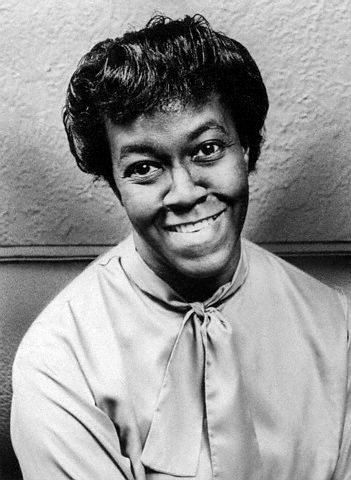
Gwendolyn Brooks (1917-2000)
 (Image Source: Famous Poets & Poems)
Gwendolyn Brooks was born in Topeka, Kansas, and raised in Chicago, Illinois. A graduate of Wilson Junior College, she studied modern poetry with Inez Cunning Stark Boulton at Chicago’s Southside Community Art Center. After becoming a writer, she ran workshops for underprivileged youths and taught her craft at various schools, including City College in New York. Brooks’s primary subject was the African-American experience: her first book, A Street in Bronzeville (1945), took its title from the name journalists applied to Chicago’s black ghetto. Like Langston Hughes, Brooks depicted the lives of “ordinary ” people; without succumbing to sentimentality, she celebrated their vitality in the face of hardship. After 1967, when Brooks’s “Blackness..[confronted her] with a shrill spelling of itself,” her work grew more militant and political. Her poetry relies on strong rhythms, and its textured diction derives in part from gospel preachers and from street talk. She increasingly moved away from closed forms to open, improvisational ones. (Biographical Summary from Norton's Anthology of Poetry, 4th Edition.)
Form
Apart from a poem’s internal structure—organization of ideas, images, metaphors, etc.—it also has an “external” structure, or form. When you look at the poem, how does it look? Is it one long strip of lines, or is it broken into stanzas? (A stanza, as you know, is a group of lines that go together.) Are the stanzas different in length or the same? Are the stanzas connected with the same metrical pattern, or is the meter different in different stanzas? These questions may help you to discover the form of the poem.
When no special form is visible, the lines merely flow one into the other with no stanzas to break them apart, we can reform to it as continuous form, for example “The Widow’s Lament in Springtime,” by William Carlos Williams. In Arp & Johnson’s glossary continuous form is described as “That form of a poem in which the lines follow each other without formal grouping, the only breaks being dictated by units of meaning” (p. 422). Similar to continuous form is free verse. This type of form is also without any formal grouping. Arp & Johnson explains it as “Nonmetrical poetry in which the basic rhythmic unit is the line, and in which pauses, line breaks, and formal patterns develop organically from the requirements of the individual poem rather than from established forms” (p. 424). In other words, there are no infringements made on the poem – no specific rhythmic or stanza requirements.
Often poems are structured into stanzas. Arp & Johnson explains that in “stanzaic form the poet writes in a series of stanzas; that is, repeated units having the same number of lines, usually the same metrical pattern, and often an identical rhyme scheme” (p. 244). While modern poetry may make use of stanzaic form, the do not always exhibit precise stanzas with specific metrical patterns or identical rhyme scheme. Modern poets tend to experiment more with the older forms. Nonetheless, it is still necessary to know the basic types of stanzas. Following are some types of stanzas:
Couplet: Two successive lines, usually in the same meter, and often linked by rhyme.
Tercet: A three line stanza.
Quatrain: A four-line stanza. The quatrain can sometimes be part four-line division within a sonnet and identifiable through its rhyme scheme.
Sestet: A six-line stanza. The sestet can also be part of an Italian sonnet – the last six lines.
Octave: An eight-line stanza. The first eight lines of an Italian sonnet is often an octave.
A Fixed form is a traditional pattern that applies to whole poem. The most common fixed form in English poetry is the sonnet, which is a poem that contains exactly fourteen lines and usually in iambic pentameter. There are three types of fixed forms, namely the Italian (or Petrarchan sonnet), the English (or Shakespearean sonnet) and the Spenserian sonnet. The diagram below depicts these sonnets with their individual rhyme schemes and stanzaic structures.
 Jon Stalworthy. 1983. “Versification” p. 1416. (In The Norton Anthology of Poetry, 3rd Edition.)
While many modern poets use the sonnet, they often do not stick to the fixed tradition. An example is “Harlem Hopscotch” by Maya Angelou.
The basic forms outlined above is adequate for this course; however, for those of you interested in more types of forms in poetry, refer to the essay “Versification” (p. 1403-1422) by Jon Stallworthy in The Norton Anthology of Poetry, 3rd Edition, specifically the part on “Form” (p. 1431-1422).
When no special form is visible, the lines merely flow one into the other with no stanzas to break them apart, we can reform to it as continuous form, for example “The Widow’s Lament in Springtime,” by William Carlos Williams. In Arp & Johnson’s glossary continuous form is described as “That form of a poem in which the lines follow each other without formal grouping, the only breaks being dictated by units of meaning” (p. 422). Similar to continuous form is free verse. This type of form is also without any formal grouping. Arp & Johnson explains it as “Nonmetrical poetry in which the basic rhythmic unit is the line, and in which pauses, line breaks, and formal patterns develop organically from the requirements of the individual poem rather than from established forms” (p. 424). In other words, there are no infringements made on the poem – no specific rhythmic or stanza requirements.
Often poems are structured into stanzas. Arp & Johnson explains that in “stanzaic form the poet writes in a series of stanzas; that is, repeated units having the same number of lines, usually the same metrical pattern, and often an identical rhyme scheme” (p. 244). While modern poetry may make use of stanzaic form, the do not always exhibit precise stanzas with specific metrical patterns or identical rhyme scheme. Modern poets tend to experiment more with the older forms. Nonetheless, it is still necessary to know the basic types of stanzas. Following are some types of stanzas:
Couplet: Two successive lines, usually in the same meter, and often linked by rhyme.
Tercet: A three line stanza.
Quatrain: A four-line stanza. The quatrain can sometimes be part four-line division within a sonnet and identifiable through its rhyme scheme.
Sestet: A six-line stanza. The sestet can also be part of an Italian sonnet – the last six lines.
Octave: An eight-line stanza. The first eight lines of an Italian sonnet is often an octave.
A Fixed form is a traditional pattern that applies to whole poem. The most common fixed form in English poetry is the sonnet, which is a poem that contains exactly fourteen lines and usually in iambic pentameter. There are three types of fixed forms, namely the Italian (or Petrarchan sonnet), the English (or Shakespearean sonnet) and the Spenserian sonnet. The diagram below depicts these sonnets with their individual rhyme schemes and stanzaic structures.
 Jon Stalworthy. 1983. “Versification” p. 1416. (In The Norton Anthology of Poetry, 3rd Edition.)
While many modern poets use the sonnet, they often do not stick to the fixed tradition. An example is “Harlem Hopscotch” by Maya Angelou.
The basic forms outlined above is adequate for this course; however, for those of you interested in more types of forms in poetry, refer to the essay “Versification” (p. 1403-1422) by Jon Stallworthy in The Norton Anthology of Poetry, 3rd Edition, specifically the part on “Form” (p. 1431-1422).
Sound & Meaning
In poetry the music quality of words is used to great effect. The purpose is not merely ornamental, but also meaningful. Sound & Sense explains that “Rhythm and sound cooperate to produce what we call the music of poetry. This music, as we have pointed out, may serve two general functions: it may be enjoyable in itself, or it may reinforce meaning and intensify communication” (p. 224). What is important for you is to be able to identify when and how sounds in a poem convey or reinforce meaning in the poem.
The musical quality of a poem is achieved “by the choice and arrangement of sounds and by the arrangement of accents” (p. 181).
Rhyme
When same-sounding (rhyming) vowels are placed in close proximity it is known as assonance. The repetition of initial consonant sounds is known as alliteration. When the consonants repeat at the end of syllables it is called consonance. “Rhyme,” explains Arp & Johnson “is the repetition of the accented vowel sound and any succeeding consonant sounds” (p. 183). Rhyming, therefore requires the repetition of both an accent vowel sound and a consonant sound. You can read more about assonance and alliteration here.
When the rhyme involves only a single syllable it is called masculine, for example “fat” and “cat.” If more than one syllable is involved, like “spitefully” and “delightfully,” it is known as feminine rhyme. You can learn more about masculine and feminine rhyme, as well as end rhyme and approximate (imperfect) rhyme here.
Rhythm
As already mentioned, an important part of the music in poetry is rhythm. Rhythm is concerned with the accents, or stresses, in words. In English, certain syllables in words usually gets stressed more during pronunciation than other syllables. For example we say WONderful, not wonderful, or wonderFUL. The arrangement of such stresses in poetic lines creates a rhythm, known as the lines “Meter.” The meter is made up of a number of feet – each foot is one basic rhythmical unit of syllables. Read more about rhythm and the different types of feet and meter here.
Onomatopoeia
An interesting musical device in poetry is onomatopoeia, which refers to a word that mimics the sound it describes. For example “cock-a-doodle-do” refers to the crow of a rooster, or “woof-woof” to the barking of a dog.
Phonetic Intensives
In many Western languages certain sounds seem to indicate similar ideas.
For example:
The initial fl sound depicts moving light, e.g. flame, flicker, flash. An initial gl sound depicts unmoving light: glow, gleam, glint, glare. Or the initial str sound refers to long lines: street, stream, stripe, streak. For more, see Arp & Johnson, p. 225 and 226.
Euphony & Cacophony
Some sounds are pleasing (euphonious) and other sounds are non-pleasing (cacophonous). A poet can use this to emphasize the meaning in a poem. For example in the poem “Spring and All” by William Carlos Williams, the dead plants are described with words that contain many strong (plosive) consonants: “brown with dried weeds,” “forked, upstanding, twiggy / stuff of bushes.” These cacophonic sounds give emphasis to ugliness of the dead plants. Generally long vowels are more euphonic than shorter vowels, and smooth sounding consonants, like the liquids (l, m, n, and r) and other soft consonants like v, f are more euphonic than the plosives (b, d, g, k, p, and t), which are usually more cacophonic.
The musical quality of a poem is achieved “by the choice and arrangement of sounds and by the arrangement of accents” (p. 181).
Rhyme
When same-sounding (rhyming) vowels are placed in close proximity it is known as assonance. The repetition of initial consonant sounds is known as alliteration. When the consonants repeat at the end of syllables it is called consonance. “Rhyme,” explains Arp & Johnson “is the repetition of the accented vowel sound and any succeeding consonant sounds” (p. 183). Rhyming, therefore requires the repetition of both an accent vowel sound and a consonant sound. You can read more about assonance and alliteration here.
When the rhyme involves only a single syllable it is called masculine, for example “fat” and “cat.” If more than one syllable is involved, like “spitefully” and “delightfully,” it is known as feminine rhyme. You can learn more about masculine and feminine rhyme, as well as end rhyme and approximate (imperfect) rhyme here.
Rhythm
As already mentioned, an important part of the music in poetry is rhythm. Rhythm is concerned with the accents, or stresses, in words. In English, certain syllables in words usually gets stressed more during pronunciation than other syllables. For example we say WONderful, not wonderful, or wonderFUL. The arrangement of such stresses in poetic lines creates a rhythm, known as the lines “Meter.” The meter is made up of a number of feet – each foot is one basic rhythmical unit of syllables. Read more about rhythm and the different types of feet and meter here.
Onomatopoeia
An interesting musical device in poetry is onomatopoeia, which refers to a word that mimics the sound it describes. For example “cock-a-doodle-do” refers to the crow of a rooster, or “woof-woof” to the barking of a dog.
Phonetic Intensives
In many Western languages certain sounds seem to indicate similar ideas.
For example:
The initial fl sound depicts moving light, e.g. flame, flicker, flash. An initial gl sound depicts unmoving light: glow, gleam, glint, glare. Or the initial str sound refers to long lines: street, stream, stripe, streak. For more, see Arp & Johnson, p. 225 and 226.
Euphony & Cacophony
Some sounds are pleasing (euphonious) and other sounds are non-pleasing (cacophonous). A poet can use this to emphasize the meaning in a poem. For example in the poem “Spring and All” by William Carlos Williams, the dead plants are described with words that contain many strong (plosive) consonants: “brown with dried weeds,” “forked, upstanding, twiggy / stuff of bushes.” These cacophonic sounds give emphasis to ugliness of the dead plants. Generally long vowels are more euphonic than shorter vowels, and smooth sounding consonants, like the liquids (l, m, n, and r) and other soft consonants like v, f are more euphonic than the plosives (b, d, g, k, p, and t), which are usually more cacophonic.
Langston Hughes (1902-1967)

Langston Hughes was born in Joplin, Missouri, and raised in Missouri, Kansas, Illinois, and Ohio. He attended Columbia University from 1921 until 1922, then traveled extensively in South America and Europe before moving to Washington, D.C., in 1925. The next year Hughes published his first collection of poems, The Weary Blues, to great acclaim. In 1929 he received a B.A. from Lincoln University in Pennsylvania, but from 1928 until 1930 he lived in New York City and was a prominent figure in the Harlem Renaissance. In addition to poetry, he wrote fiction, drama, screenplays, essays, and autobiography. Because of his journalistic work in support of the Republican side during the Spanish Civil War and his sympathies for the American Communists, in 1953 he was called to testify before Senator Joseph McCarthy’s committee on subversive activities, and for many years following he worked to restore his reputation. Always concerned “largely … with the depicting of Negro life in America,” Hughes – like Whitman, Sandburg, and Dunbar – populated his poems with urban figures, such as busboys, elevator operators, cabaret singers, and streetwalkers. He documented their troubles in social-protest poems, drawing his meters and moods from street language, jazz, and the blues. (Biographical Summary from Norton's Anthology of Poetry, 4th Edition.)
Assignment:Themes in "The Lovesong of J. Alfred Prufrock"
Write an essay in which you identify and discuss three themes in the poem "The Lovesong of J. Alfred Prufrock" by T. S. Eliot.
Your essay should have a clear introductory paragraph with a thesis statement that gives a scope of the three themes you will discuss. It should have three body paragraphs, each discussing one theme; and finally, a concluding paragraph that reviews what you discussed. In all, five paragraphs.
Your essay should have a clear introductory paragraph with a thesis statement that gives a scope of the three themes you will discuss. It should have three body paragraphs, each discussing one theme; and finally, a concluding paragraph that reviews what you discussed. In all, five paragraphs.
T.S. Eliot (1888-1965)

T(homas) S(tearns) Eliot was born to a distinguished New England family, raised in St. Louis, Missouri, and educated at Havard University, the Sorbonne, and Oxford University, where he wrote his Ph.D. dissertation on the English logician and metaphysician F.H. Bradly. The critic Arthur Symons’ work on the French symbolists was a seminal influence on Eliot, as was the poet Ezra Pound, who encouraged him to stay in Europe. From 1917 until 1925 he worked in the International Department at Lloyd’s Bank, after which he joined the publishing the work of W. H. Auden, Stephen Spender, Louis MacNeice, and other young poets. He also edited the Egoist magazine and founded the influential Criterion. In 1927 Eliot took British citizenship and joined the Church of England. In his later years, he wrote compelling critical studies on literature, culture, society, and religion, ad generally is considered the most influential critic of the century. In addition, he dismissed The Waste Land, which he wrote largely while hospitalized for a breakdown in 1921, as “the relief of a personal and wholly insignificant grouse against life,” his generation considered it a definitive explication of its distress. Eliot intended to amalgamate the disparate “fragments” in the poem- taken from classical, English, and European literature, Hindu texts, and popular culture, and spoken by multiple voices and characters – into a new whole offering a form of spiritual renewal. The Waste Land (which Pound helped edit), like “The Love Song of J. Alfred Prufrock” (which Pound helped publish) and other early poems of Eliot’s, comments on the barrenness of modern civilization and displays a rich complexity of tone, which ranges from satiric to lyrical and elegiac. Eliot’s later work documents his conversion to Christianity and culminates in Four Quartets, which he considered his masterpiece. (Biographical Summary from Norton's Anthology of Poetry, 4th Edition.)
William Carlos Williams (1883-1963)

William Carlos Williams was born in Rutherford, New Jersey. In 1906 he earned an M.D. from the University of Pennsylvania, where he met the poet Ezra Pound and H.D. and the painter Charles Demuth. In 1910 he opened a pediatric practice in Rutherford, where, except for a year’s “sabbatical” in Europe, he lived and practice medicine for the rest of his life. Although strongly established in Rutherford, Williams was hardly provincial. He moved in New York’s avant-grade circles- along with the poets Marianne Moore and Wallace Stevens and the artist Marcel Duchamp- and was affiliated with several short-lived but influential journals. In addition to poetry, he wrote fiction, drama, and essays. Influenced by Pound, Williams was an early proponent of imagism, a movement he valued for its stripping away of conventions that obfuscated the true significance of things. Later he regretted that imagism had “dribbled off into so called ‘free verse’ ” and declared himself an objectivist, valuing the rigor of form. Williams called on his contemporaries to create a distinctly American art, arising out of the materials of the place, responding to contemporary necessities, firmly rooted in particulars: “No ideas but in things,” he insisted time and again. These edits find their culmination in Williams’ masterpiece Paterson (1946-58), a five-volume poem that recounts the history of Rutherford and nearby Paterson and transforms the locale into the embodiment of modern humanity.(Biographical Summary from Norton's Anthology of Poetry, 4th Edition.)
Topic, Idea, Theme
When I ask you what a poem is about, you can answer me by giving me the topic, the main idea, or a theme.
The topic is the subject(s) discussed in the poem. For instance, in “The Anecdote of a Jar” the topic is a “jar” placed upon a hill.
We already covered idea, in a previous post. The (main) idea of the poem tells us about the purpose of the poem. By figuring out the idea, we are figuring out the message that the poet or the narrator (speaker in the poem) is conveying to the reader. An idea in “Anecdote of the Jar” may be the interrelation between man, art, and nature. Man creates art using material from nature; therefore the artist (man), the artifact (in this case the “jar”), and nature (the “clay” used to make the jar) are all connected. Another idea in this poem can be man’s dominion over nature, with the “jar” becoming a symbol for man; or man’s domestication of nature: "the wilderness rose up to" the jar, "no longer wild" (lines 5 & 6).
A theme is any broad idea which is common in literature. There are many themes in literature and with a little practice and lots of reading you will start to recognize them easily. For instance a popular theme is the Forcefulness of Love (think for example of Shakespeare’s “Romeo and Juliet”), the Inevitability of Death (Wallace Steven’s “The Death of a Soldier”), or Man versus Nature which is the theme in “Anecdote of the Jar.” Another theme, related to Man versus Nature, is Natural versus Artificial. A poem may have more than one theme. Whenever you want to discuss the contents of a poem, it is important to figure out what its themes are.
The idea of a poem is usually based on a theme, but is more specific than a theme. In "Anecdote of the Jar" the theme may be Man versus Nature; but more specifically, the idea is Man's Domestication of Nature. The theme tells us that there is a figurative battle between man and nature, and the idea tells us who is winning this battle. In the context of this poem it is man who is winning, as the jar, which is a symbol (metonomy) for man, takes "dominion everywhere" (line 9).
The topic is the subject(s) discussed in the poem. For instance, in “The Anecdote of a Jar” the topic is a “jar” placed upon a hill.
We already covered idea, in a previous post. The (main) idea of the poem tells us about the purpose of the poem. By figuring out the idea, we are figuring out the message that the poet or the narrator (speaker in the poem) is conveying to the reader. An idea in “Anecdote of the Jar” may be the interrelation between man, art, and nature. Man creates art using material from nature; therefore the artist (man), the artifact (in this case the “jar”), and nature (the “clay” used to make the jar) are all connected. Another idea in this poem can be man’s dominion over nature, with the “jar” becoming a symbol for man; or man’s domestication of nature: "the wilderness rose up to" the jar, "no longer wild" (lines 5 & 6).
A theme is any broad idea which is common in literature. There are many themes in literature and with a little practice and lots of reading you will start to recognize them easily. For instance a popular theme is the Forcefulness of Love (think for example of Shakespeare’s “Romeo and Juliet”), the Inevitability of Death (Wallace Steven’s “The Death of a Soldier”), or Man versus Nature which is the theme in “Anecdote of the Jar.” Another theme, related to Man versus Nature, is Natural versus Artificial. A poem may have more than one theme. Whenever you want to discuss the contents of a poem, it is important to figure out what its themes are.
The idea of a poem is usually based on a theme, but is more specific than a theme. In "Anecdote of the Jar" the theme may be Man versus Nature; but more specifically, the idea is Man's Domestication of Nature. The theme tells us that there is a figurative battle between man and nature, and the idea tells us who is winning this battle. In the context of this poem it is man who is winning, as the jar, which is a symbol (metonomy) for man, takes "dominion everywhere" (line 9).
Prose Meaning, Idea, Total Meaning, and Tone
It is possible to get a meaning of a poem by writing a prose paraphrase of the poem. Through this summary of the poem one gets what is known as the prose meaning of the poem. If one is to summarize the poem even further, into a single thought, or in one or two sentences, one is left with the main idea of the poem.
The prose meaning, however, loses much of the original poems richness. The richness of the poem is contained in the specific words chosen and their connotative meanings, the various images, the poetic devices used, the sound quality of the poem when read, and so on. The prose meaning does not convey these truly poetic qualities of the poem. To really understand the poem in all its richness, one need to do an explication (detailed explanation) of the poem, which take into account all the poetic elements in the poem. Such an explication will give us the total meaning of the poem.
Such an understanding of the poem may also give as a prominent feeling, an emotional quality that seems inherent in the poem. This feeling is known as the poem’s tone.
Exercise 1: Explain how a poem that expresses an idea with which you do not agree may, nevertheless, be a source of appreciation and enjoyment. (From “Reviewing Chapter Nine,” Sound & Sense, p. 152.)
Exercise 2: How is tone conveyed in spoken language? How is tone conveyed in written language?
Exercise 3: Tone is usually identified by an adjective. With what adjectives would you describe the tone in Wallace Stevens’ poem “Snow Man”?
Assignment: Read Wallace Steven’s poem “Anecdote of the Jar.” In a paragraph explain the prose meaning of the poem (in other words, give a summary of the poem.) Also indicate the main idea and the tone of the poem.
The prose meaning, however, loses much of the original poems richness. The richness of the poem is contained in the specific words chosen and their connotative meanings, the various images, the poetic devices used, the sound quality of the poem when read, and so on. The prose meaning does not convey these truly poetic qualities of the poem. To really understand the poem in all its richness, one need to do an explication (detailed explanation) of the poem, which take into account all the poetic elements in the poem. Such an explication will give us the total meaning of the poem.
Such an understanding of the poem may also give as a prominent feeling, an emotional quality that seems inherent in the poem. This feeling is known as the poem’s tone.
Exercise 1: Explain how a poem that expresses an idea with which you do not agree may, nevertheless, be a source of appreciation and enjoyment. (From “Reviewing Chapter Nine,” Sound & Sense, p. 152.)
Exercise 2: How is tone conveyed in spoken language? How is tone conveyed in written language?
Exercise 3: Tone is usually identified by an adjective. With what adjectives would you describe the tone in Wallace Stevens’ poem “Snow Man”?
Assignment: Read Wallace Steven’s poem “Anecdote of the Jar.” In a paragraph explain the prose meaning of the poem (in other words, give a summary of the poem.) Also indicate the main idea and the tone of the poem.
Wallace Stevens (1879-1955)

Wallace Stevens was born and raised in Reading, Pennsylvania. After attending Harvard University for three years, Stevens moved to New York City, where he went to law school, worked in a number of law firms, and associated with prominent avant-grade artists, including the poets William Carlos Williams and Marianne Moore. In 1916, he went to work for the Harford Accident and Indemnity Company, and he stayed with the firm for the rest of his life, becoming a vice president in 1934. His quiet life in an upper-class neighborhood in Harford, Connecticut, seemed in sharp contrast with the vitality and sensuousness of so many of his poems. In his early work- dandified, ornate, and musical-Stevens explored the dynamic interplay between reality and the imagination. He adopted a plainer but more abstract style in his later work, both praised and criticized as a “poetry of ideas.” In place of conventional faiths, Stevens posited a Romantic’s belief in poetry, or more precisely, in the regenerative and redemptive act of imaging and reimagining. The poet, Stevens believed, “creates the world to which we turn incessantly and without knowing I and … gives to life the supreme fictions without which we are unable to conceive of it.” (Biographical Summary from Norton's Anthology of Poetry, 4th Edition.)
Some Thoughts on Ezra Pound
Imagism was a poetic movement started by Ezra Pound which focused on concrete and clear imagery. The Norton Anthology of American Literature explains: "Pound first campaigned for 'imagistic,' his name for a new kind of poetry. Rather than describing something - an object or situation - and then generalizing about it, imagist poets attempted to present the object directly, avoiding the ornate diction and complex but predictable verse forms of traditional poetry." Pound explained it as follows: “The point of Imagism is that it does not use images as ornaments. The image is itself the speech. The image is the word beyond formulated language.”
Pound was especially influenced by the vivid imagery used in Oriental poetry.
Look at his poem “In a Station of a Metro”:
The poem is a type of Haiku (a very short poem in the Japanese tradition). The words are simple and clear, with vivid imagery used.
Look at Pound’s poem “Ts’ai Chi’h” in which he describes falling rose petals:
The poem is made-up almost exclusively of vivid images.
Now consider a longer poem by Pound. Take, for instance, “The River-Merchant’s Wife: A Letter.” This poem is an adaptation by Pound from a poem originally by the Chinese poet Li Po. This poem is also full of vivid imagery. Unlike the previous haiku-poems listed above, where the images are used merely to capture a visual impression in time, in “The River-Merchant’s Wife” the images have a deeper function. Many of the images in the poem show the relationship and feelings between the River-Merchant and his wife (the speaker in the poem).
Exercise 1: See if you can identify these images that show the relationship and / or feelings of the River-Merchant and his wife towards each other.
Exercise 2: A reoccurring theme in Ezra Pound’s ouvre is the idea that riches and status does not equal happiness. Keeping this theme in mind, look at the poems “Salutation” and “The Garden.” Explain how this theme is applicable in these two poems.
Exercise 3: In “The Garden” the woman is described as “a skein of loose silk blown against a wall.” Elaborate on this image, and different connotative meanings of silk, and how this characterizes the woman. In other words, what can we infer about the woman from this image.
Exercise 4: The poem “The Garden” contains an allusion. Identify the allusion, mention where it is from, and describe what it may mean within the context of this poem.
Pound was especially influenced by the vivid imagery used in Oriental poetry.
Look at his poem “In a Station of a Metro”:
The apparition of these faces in the crowd;
Petals on a wet, black bough.
The poem is a type of Haiku (a very short poem in the Japanese tradition). The words are simple and clear, with vivid imagery used.
Look at Pound’s poem “Ts’ai Chi’h” in which he describes falling rose petals:
The petals fall in the fountain,
the orange-colored rose-leaves,
Their ochre clings to the stone.
The poem is made-up almost exclusively of vivid images.
Now consider a longer poem by Pound. Take, for instance, “The River-Merchant’s Wife: A Letter.” This poem is an adaptation by Pound from a poem originally by the Chinese poet Li Po. This poem is also full of vivid imagery. Unlike the previous haiku-poems listed above, where the images are used merely to capture a visual impression in time, in “The River-Merchant’s Wife” the images have a deeper function. Many of the images in the poem show the relationship and feelings between the River-Merchant and his wife (the speaker in the poem).
Exercise 1: See if you can identify these images that show the relationship and / or feelings of the River-Merchant and his wife towards each other.
Exercise 2: A reoccurring theme in Ezra Pound’s ouvre is the idea that riches and status does not equal happiness. Keeping this theme in mind, look at the poems “Salutation” and “The Garden.” Explain how this theme is applicable in these two poems.
Exercise 3: In “The Garden” the woman is described as “a skein of loose silk blown against a wall.” Elaborate on this image, and different connotative meanings of silk, and how this characterizes the woman. In other words, what can we infer about the woman from this image.
Exercise 4: The poem “The Garden” contains an allusion. Identify the allusion, mention where it is from, and describe what it may mean within the context of this poem.
Ezra Pound (1885-1972)

Ezra Pound was born in Hailey, Idaho, and raised in a suburb of Philadelphia. He was educated at Hamilton College and at the University of Pennsylvania, where he studied languages and became lifelong friends with the poet William Carlos Williams. In 1908 Pound moved to London, where he met the most prominent artists and writers of his day, including W. B Yeats, for whom he worked as secretary. He also championed the careers of such promising writers as Robert Frost, T. S Eliot, and James Joyce. Pound moved to Paris in 1920, and to Rapallo, Italy, in 1924. In 1930 he met the Italian dictator Benito Mussolini and began to write on economics and politics. During World War Ⅱ he made a series of pro-Fascist and anti-Semitic radio broadcasts that culminated in an indictment for treason. Flown to the United States to stand trial, he was adjudged mentally unfit and sentenced to St. Elizabeth’s Hospital for the Criminally Insane in Washington, D.C., where he remained until 1958. Upon his release he returned to Italy. In 1912, Pound, H. D., and Richard Aldington had launched imagism, a literary movement whose manifesto promised: “1. Direct treatment of the ‘thing’ whether subjective or objective. 2. To use absolutely no word that does not contribute to the presentation. 3. As regarding rhythm: to compose tin the sequence of a musical phrase, not in sequence of a metronome. ” Soon dissatisfied with a slackness he saw creeping into the imagist movement, and increasingly influenced by avant-grade visual artists such as Wyndlham Lewis, Pound moved on to vorticism, whose practitioners strove to depict dynamic energies rather than represent static images. In 1920, Pound’s attempts to modernize his work, to “make it new,” while preserving the best history had to offer, resulted in Hug Selywn Mauberley, whose foreign phrase, literary fragments, and abrupt shifts of scene anticipated Eliot’s The Waste Land (1922), which Pound edited masterfully. The crowning achievement of his career is the Cantos, which he began to write in earnest in 1924 but never finished to his satisfaction. Both turgid and brilliant, the Cantos are “a mosaic of images, ideas phrases-politics, ethics, economics-anecdotes, insults, denunciations-English, Greek, Italian, Provencal, Chinese,” and so on, which attack the corruption Pound thought endemic to modern civilization. The poems follow no easily discernible pattern or line of logic. According to Pound, however, “the forma, the immortal concetto,” or underlying organizing concept, is a dynamic one that might be compared to “the rose-pattern driven into the dead iron filings by the magnet.” (Biographical Summary from Norton's Anthology of Poetry, 4th Edition.)
Figurative Language III: Paradox, Overstatement & Understatement, Irony, Sarcasm & Satire, Allusion
Paradox
A paradox is a contradiction. The paradox may be either a situation (situational paradox) or a statement (verbal paradox / paradoxical statement). “In a paradoxical statement the contradiction usually stems from one of the words being used figuratively” (Sound & Sense, p. 113).
An example of a paradox in poetry can be found in Emily Dickinson’s poem “Much Madness is divinest Sense” (Sound & Sense, p. 114). How can “madness” be “sense”? In the poem the speaker also claims that “Much Sense” is “Madness”; this is also a contradiction.
“The value of paradox is its shock value. Its seeming impossibility startles the reader into attention and, by the fact of its apparent absurdity, underscores the truth of what is being said” (Sound & Sense, p. 113).
Overstatement & Understatement
If you say “I’m so tired I could die!” you are exaggerating. In poetry such exaggeration is called overstatement, or hyperbole. The opposite of overstatement is understatement, which is saying less than what you really mean. For instance, if your mother prepared a feast for her guests but says “It is only a little food,” this would be called understatement.
Irony, Sarcasm, and Satire
Irony (specifically verbal irony) is saying the opposite of what one means. If I visit someone in hospital who is seriously ill and I tell him “You look healthy,” then this is a form of verbal irony. Sometimes a situation can be ironic. “[I]rony of situation, occurs when a discrepancy exists between the actual circumstances and those that would seem appropriate or between what one anticipates and what actually comes to pass. If a man and his second wife, on the first night of their honeymoon, are accidentally seated at the theatre next to the man’s first wife, we should call the situation ironic” (Sound & Sense, p. 121).
The word “sarcasm” comes from a Greek word that means ‘to tear flesh.’ “Sarcasm is simply bitter or cutting speech, intended to wound feelings” (Sound & Sense, p. 117). Often sarcasm distorts the truth in order to ridicule. Satire is word used for certain types of literature. Like sarcasm, satire also intends to ridicule. Unlike sarcasm, which sole intention is to hurt feelings, satire aspires to bring about reform.
“Sarcasm, we may say, is cruel, as a bully is cruel: it intends to give hurt. Satire is both cruel and kind, as a surgeon is cruel and kind: it gives hurt in the interest of the patient or of society. Irony is neither cruel nor kind: it is simply a device, like a surgeon’s scalpel, for performing any operation more skilfully” (Sound & Sense, p. 117).
Allusion
An allusion is a reference to something in history or previous literature (Sound & Sense, p. 135). “Allusions are a means of reinforcing the emotion or the ideas of one’s own work with the emotions or ideas of another work or occasion” (Sound & Sense, p. 136). Allusions are often made from old and classical texts such as Shakespeare, the King James Bible, Greek mythology, folklore, or other famous literature or great historic events.
A paradox is a contradiction. The paradox may be either a situation (situational paradox) or a statement (verbal paradox / paradoxical statement). “In a paradoxical statement the contradiction usually stems from one of the words being used figuratively” (Sound & Sense, p. 113).
An example of a paradox in poetry can be found in Emily Dickinson’s poem “Much Madness is divinest Sense” (Sound & Sense, p. 114). How can “madness” be “sense”? In the poem the speaker also claims that “Much Sense” is “Madness”; this is also a contradiction.
“The value of paradox is its shock value. Its seeming impossibility startles the reader into attention and, by the fact of its apparent absurdity, underscores the truth of what is being said” (Sound & Sense, p. 113).
Overstatement & Understatement
If you say “I’m so tired I could die!” you are exaggerating. In poetry such exaggeration is called overstatement, or hyperbole. The opposite of overstatement is understatement, which is saying less than what you really mean. For instance, if your mother prepared a feast for her guests but says “It is only a little food,” this would be called understatement.
Irony, Sarcasm, and Satire
Irony (specifically verbal irony) is saying the opposite of what one means. If I visit someone in hospital who is seriously ill and I tell him “You look healthy,” then this is a form of verbal irony. Sometimes a situation can be ironic. “[I]rony of situation, occurs when a discrepancy exists between the actual circumstances and those that would seem appropriate or between what one anticipates and what actually comes to pass. If a man and his second wife, on the first night of their honeymoon, are accidentally seated at the theatre next to the man’s first wife, we should call the situation ironic” (Sound & Sense, p. 121).
The word “sarcasm” comes from a Greek word that means ‘to tear flesh.’ “Sarcasm is simply bitter or cutting speech, intended to wound feelings” (Sound & Sense, p. 117). Often sarcasm distorts the truth in order to ridicule. Satire is word used for certain types of literature. Like sarcasm, satire also intends to ridicule. Unlike sarcasm, which sole intention is to hurt feelings, satire aspires to bring about reform.
“Sarcasm, we may say, is cruel, as a bully is cruel: it intends to give hurt. Satire is both cruel and kind, as a surgeon is cruel and kind: it gives hurt in the interest of the patient or of society. Irony is neither cruel nor kind: it is simply a device, like a surgeon’s scalpel, for performing any operation more skilfully” (Sound & Sense, p. 117).
Allusion
An allusion is a reference to something in history or previous literature (Sound & Sense, p. 135). “Allusions are a means of reinforcing the emotion or the ideas of one’s own work with the emotions or ideas of another work or occasion” (Sound & Sense, p. 136). Allusions are often made from old and classical texts such as Shakespeare, the King James Bible, Greek mythology, folklore, or other famous literature or great historic events.
E.E Cummings (1894-1962)

E(dward) E(stlin) Cummings was born in Cambridge, Massachusetts, and educated at Harvard University. In the early 1920s he lived in both New York City (where he was affiliated with the Dial magazine group, which included the poet Marianne Moore) and Paris (where he met the poets Ezra Pound, Hart Crane, and Archibald MacLeish). In his later years he lived primarily in New York. Cummings has always had a mixed critical reception, but at the time of his death he was one of the best-known and best-liked American poets. Like his paintings, Cummings’ poems reflect his devotion to the advantage; he was influenced by the impressionist and cubist movements in the visual arts and by imagism, vorticism, and futurism in literature. Through his radical experiments with syntax, typography, and line, he defamiliarized common subjects and thus challenged conventional ways of perceiving the world. Yet he respected many poetic conventions: regular rhyme schemes and traditional forms are often discernible under the fractured surface satires of “mostpeople” who blindly make their way thought the “unworld” are often scathing, and his poems convey an anarchistic, rebellious stance toward politics and religion, but Cummings, who celebrated joy, beauty, and sexual love, shared the Transcendentalists’ faith in humanity and their appreciation of the natural world. (Biographical Summary from Norton's Anthology of Poetry, 4th Edition.)
Assignment: Explication Essay (Due Thursday, Oct 15th)
Write an explication (of about 500 to 800 words) of a single poem by any of the poets we have discussed: Poe, Dickinson, Whitman, Frost, Sandburg or Cummings.
Before you write your essay, choose a poem you enjoyed. It should not be too short, because then you may not have enough to write about. Nor should it be too long, lest it take too much time and makes your essay too long. Read the poem you chose a couple of times and then use the “Understanding and Evaluating Poetry” (Sound & Sense, p. 11) questions as an aid to understand the poem better. Considering the answers you were able to give; you will be able to see what features of the poem you have much to say about, and what you have little to say about. Choose the points you can say the most about to use for your explication. You should have at least three main points (three body paragraphs). Find some way to link these points, for instance a theme, idea, function, etc.
An explication is a detailed description of a poem, often line by line. For your essay you need to write at least five paragraphs, of which the first is the introduction and the last paragraph is the conclusion. Therefore, you need three or more body paragraphs. Each body paragraph should focus on an important feature of the poem; for instance, the poem’s structure, the use of imagery, rhythm and rhyme, or some other poetic devices.
For an explication, your introductory paragraph should give some background information about the poet and the poem, as well as a summary of the poem – including the major themes in the poem. As an introductory paragraph, it should also include a thesis statement, which introduces the topic of the essay, as well as a preview/scope of what you will discuss in the paragraphs to follow.
The concluding paragraph should give a review of what you discussed and some final thoughts.
Before you write your essay, choose a poem you enjoyed. It should not be too short, because then you may not have enough to write about. Nor should it be too long, lest it take too much time and makes your essay too long. Read the poem you chose a couple of times and then use the “Understanding and Evaluating Poetry” (Sound & Sense, p. 11) questions as an aid to understand the poem better. Considering the answers you were able to give; you will be able to see what features of the poem you have much to say about, and what you have little to say about. Choose the points you can say the most about to use for your explication. You should have at least three main points (three body paragraphs). Find some way to link these points, for instance a theme, idea, function, etc.
An explication is a detailed description of a poem, often line by line. For your essay you need to write at least five paragraphs, of which the first is the introduction and the last paragraph is the conclusion. Therefore, you need three or more body paragraphs. Each body paragraph should focus on an important feature of the poem; for instance, the poem’s structure, the use of imagery, rhythm and rhyme, or some other poetic devices.
For an explication, your introductory paragraph should give some background information about the poet and the poem, as well as a summary of the poem – including the major themes in the poem. As an introductory paragraph, it should also include a thesis statement, which introduces the topic of the essay, as well as a preview/scope of what you will discuss in the paragraphs to follow.
The concluding paragraph should give a review of what you discussed and some final thoughts.
Carl Sandburg (1878-1967)

(Image Source: Chicago Public Radio)
Carl Sandburg was born in Galesburg, Illinois. He left school after the eighth grade to help support his family, but later attended Lombard College. In 1897 he embarked on a series of travels across America. His first collection of poetry, Chicago Poems, was published in 1914 and was followed by several highly acclaimed and immensely popular volumes, including Cornhusker (1918), which documents Sandburg’s war experience, and Smoke and Steel (1920), in which his disillusionment with post-World War Ⅰ America anticipates T.S. Renaissance, along with architect Frank Lloyd Wright, novelist Theodore Dreiser, and poets Vachel Lindsay and Edgar Lee Master. In the 1930s Sandburg became active in the Socialist movement. In addition to writing poetry, he devoted thirty years to the study of Abraham Lincoln and traveled the country in search of folk songs and ballads, which he collected as The American Song-Bag (1927). He also wrote novels and children’s stories. Overall, he shared Walt Whitman’s and the Futurists’ scene and admiration for the spirit of common laborers. Although his work eventually lost its once immense popularity, Sandburg’s interest in and passion for ordinary life never waned. (Biographical Summary from Norton's Anthology of Poetry, 4th Edition.)
Announcement: Lecture Changes
Please note that the order of our lecture plan is changing. Next week (Week 6: Oct 5-9) will switch with Week 7 (Oct 12-16). Also note that Test 1 scheduled for Week 6 has been moved earlier to Week 5.
Test: Poetic Devices -- Figures of Speech
We will have a test on Thursday, October 1st.
The test will cover the poetic devices and figures of speech we have discussed so far, namely: denotation & connotation, imagery, simile, metaphor, personification, apostrophe, metonymy, synecdoche, symbol, and allegory. You should be able to define these terms, as well as identify examples of these in given poems.
The test will cover the poetic devices and figures of speech we have discussed so far, namely: denotation & connotation, imagery, simile, metaphor, personification, apostrophe, metonymy, synecdoche, symbol, and allegory. You should be able to define these terms, as well as identify examples of these in given poems.
Figurative Language II: Symbol & Allegory
Symbolism
When talking about “symbolism” It is necessary to make a distinction between how the word is generally understood, and how it is understood in poetic studies. Generally, a symbol is anything that represents something else. In poetry, however, a symbol is something that “functions literally and figuratively at the same time” (Sound & Sense, p. 91).
In Frost’s poem “The Road Not Taken” we find the speaker (a traveler) recounting a time when he had to make a choice between two roads in a wood. He literally had to make a choice about which road to take. This incident also has a figurative meaning of our daily life choices when we have to make a decision between two (or more) options. Choosing which path to talk becomes a symbol for our choices in life.
Allegory
“Allegory is a narrative [i.e. a story] . . . that has a second meaning beneath the surface. Although the surface story or description may have its own interest, the author’s major interest is in the ulterior meaning” (Sound & Sense, p. 99).
An allegory always has two parts: a story/description and a deeper meaning. While we will not be studying specific allegory poems this semester, some poems have embedded within them some allegorical elements.
When talking about “symbolism” It is necessary to make a distinction between how the word is generally understood, and how it is understood in poetic studies. Generally, a symbol is anything that represents something else. In poetry, however, a symbol is something that “functions literally and figuratively at the same time” (Sound & Sense, p. 91).
In Frost’s poem “The Road Not Taken” we find the speaker (a traveler) recounting a time when he had to make a choice between two roads in a wood. He literally had to make a choice about which road to take. This incident also has a figurative meaning of our daily life choices when we have to make a decision between two (or more) options. Choosing which path to talk becomes a symbol for our choices in life.
Allegory
“Allegory is a narrative [i.e. a story] . . . that has a second meaning beneath the surface. Although the surface story or description may have its own interest, the author’s major interest is in the ulterior meaning” (Sound & Sense, p. 99).
An allegory always has two parts: a story/description and a deeper meaning. While we will not be studying specific allegory poems this semester, some poems have embedded within them some allegorical elements.
Subscribe to:
Posts (Atom)